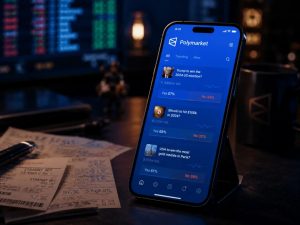
A Financial Times investigation published on October 3 put a hard number on something traders had quietly suspected for a while: a tiny, invite-only circle of Polymarket bettors is making real money while most users are not. The report centers on the polymarket alpha group, a private Discord server of roughly 30 people, mostly in their late teens and early twenties, who pool research and capital. Since 2024, the group has earned an estimated $40 million, according to the FT’s reporting.
That figure is striking on its own. It becomes more striking next to the fact that the vast majority of people on Polymarket lose money. Academic research covering 588 million trades found that about 69% of users finished below break-even, with combined losses running into the hundreds of millions of dollars. Alpha sits on the opposite end of that distribution, and the gap between the two groups is the real story.
A Small Discord, A Big Scoreboard
Alpha works less like a chat room and more like a trading desk. Members split research duties across topics like weather forecasting, elections, and conflicts involving Ukraine and Iran. They build their own probability estimates using historical data, then compare those estimates against whatever price Polymarket’s market is currently showing.
When a contract’s price looks out of line with a member’s model, the group acts fast. Capital gets pooled, positions get split among members, and the trade goes in before the mispricing closes. This is the same basic logic behind any profitable Polymarket wallet: find a price that does not match reality, and take the other side before the crowd catches up.
The Trade That Made Alpha’s Reputation
One example from the FT report illustrates how the group operates under time pressure. A trader placed a $1 million order for “yes” shares on whether Trump would create a Bitcoin reserve within his first 100 days in office. Alpha members filled half that order within a minute and collectively walked away with roughly $250,000 in profit.
A trade like that depends on speed, coordination, and a shared read of the news cycle that most individual traders cannot match. It is a useful case study in how group intelligence can outperform solo trading on markets built around breaking news, which is exactly the dynamic we explored in our look at why you can’t just copy Polymarket’s most profitable traders.
Teenagers, Age Limits, and Why Regulators Are Watching
The age profile of Alpha’s members is where this story overlaps with a live regulatory fight. The FT identified at least three teenagers among the group’s roughly 30 participants. Polymarket and Kalshi both set their US minimum trading age at 18, while New York requires users to be 21 to use licensed mobile sportsbooks.
New York’s attorney general has already pointed to that 18-to-20 age bracket as a specific concern in its broader case against prediction markets operating in the state. A group of mostly Gen Z traders earning seven figures together is the kind of example that makes that argument easier to tell, regardless of whether Alpha itself did anything against platform rules.
Context for the Alpha numbers comes from the Financial Times report that first detailed the group’s trading history and member profiles. The piece frames Alpha’s members as turning elections, wars, and disasters into what one trader called “free money on the floor,” language that is unlikely to sit well with regulators already skeptical of how these platforms are marketed to younger users.
Why Copying Alpha’s Trades Won’t Work for You
It is tempting to read a story like this and want to find the group, or at least find its trades, and ride along. That instinct runs into the same wall that trips up anyone trying to follow a profitable Polymarket wallet after the fact.
Alpha’s edge is not a public signal. It comes from pooled labor, coordinated timing, and the ability to fill a large order within sixty seconds of a price gap appearing. By the time an outside observer sees the price move on a chart, the mispricing that made the trade worthwhile is usually gone. That is the same decay problem we described in our coverage of research showing most Polymarket sports traders barely break even, where even traders who do everything by the book rarely beat a coin flip once fees are factored in.
There is also a selection effect worth keeping in mind. Alpha is one group that got reported on because it won. Plenty of similar pooled-capital Discord servers almost certainly exist and lose money quietly, with nobody writing an article about them. A single $40 million success story does not tell you much about the odds facing an individual trader deciding whether to join one.
What This Means for Everyday Traders
The practical takeaway is not that group trading is fraudulent or that Polymarket itself is broken. It is that the platform’s biggest winners tend to look less like lucky individuals and more like small, disciplined research operations with real infrastructure behind them.
For someone using Polymarket casually, the Alpha story is a reminder that the person on the other side of a trade may have thirty people checking their math before the order goes in. That does not mean casual trading is pointless, but it does mean treating a single sharp price move as a signal worth chasing is usually a mistake rather than an opportunity.