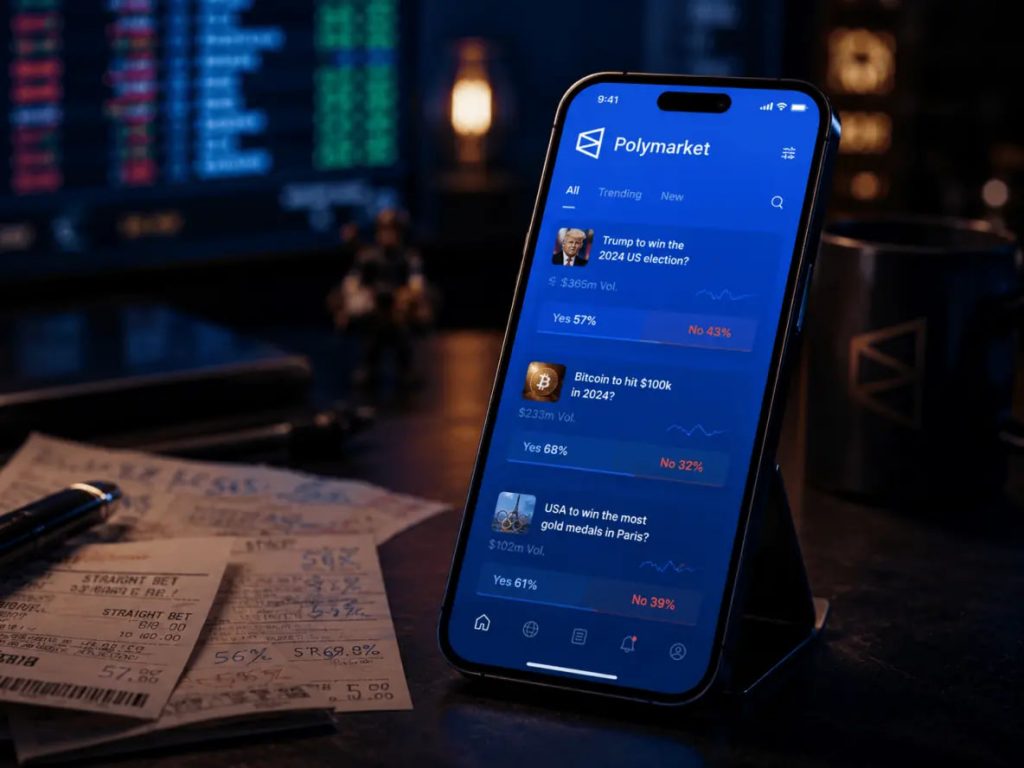
Polymarket Brazil access changed in April 2026, when Brazil’s government moved to treat event-based betting contracts as illegal. What’s actually enforced today is narrower than a flat shutdown: Polymarket’s own documentation lists Brazil as close-only, meaning existing positions can be closed but no new position can be opened, on the regular website or through the API (checked October 13, 2026). If you’re trying to figure out whether you can still use it, that distinction matters more than most coverage lets on.
What Actually Happened
On April 24, 2026, Brazil’s National Monetary Council (CMN) — a body that includes government and central bank officials — issued a binding resolution classifying event-based contracts on elections, sports, and similar outcomes as illegal betting. Polymarket was named directly, alongside Kalshi and 27 other platforms. The block took full effect by April 27.
The reasoning, according to Finance Minister Dario Durigan, centered on consumer protection — preventing the kind of unregulated betting exposure that can lead to household debt. Enforcement falls to Brazil’s securities regulator, the CVM (Comissão de Valores Mobiliários).
Brazil didn’t act in isolation. Argentina’s courts had already ordered a nationwide Polymarket block in March 2026, one month earlier. Brazil’s licensed betting industry had formally petitioned the CVM to block Polymarket and Kalshi before the resolution came down — an established industry pushing to close a competitive gap with an unregulated newcomer is a pattern that’s shown up in other countries’ bans too.
The Financial-Benchmark Exception
Brazil’s approach differs from a blanket ban like France’s or Portugal’s in one respect: the resolution carved out an exception. Contracts tied to economic and financial benchmarks — not elections, not sports, not politics — can still be offered, at the CVM’s discretion.
Brazil’s own stock exchange, B3, moved fast on this. It launched six new financial-benchmark contracts on April 27, 2026, the same day the ban took full effect — a signal that this was as much about channeling event-contract demand toward a regulated domestic product as it was about shutting the category down entirely. For election markets specifically — the ones driving most of the search interest around Brazil’s Polymarket access right now — the exception doesn’t apply.
What Still Works
According to Polymarket’s own access documentation (checked October 13, 2026), Brazil isn’t treated the same way as an OFAC-sanctioned jurisdiction. It sits in the close-only tier: users can close existing positions through the normal frontend and the API, but can’t open new ones through either. That’s a narrower restriction than the total lockout most people picture when they hear “blocked.”
In practice, that means anyone who had positions open before the CMN resolution took effect can still log in and exit them — no workaround needed for that part. Opening a brand-new position is the piece that’s actually restricted, on polymarket.com and through Polymarket’s own API alike.
For that specific restriction, the underlying markets still run as smart contracts on Polygon, reachable by anyone who can interact with the blockchain directly, independent of what Polymarket’s frontend or API will allow. That’s the mechanical reason Telegram bots connected to those same contracts, like Overdog, keep working for opening new positions from Brazil — same markets, same prices, without routing through the access tier that Polymarket itself applies to the country.
Is This Legal to Use From Brazil?
Two separate questions get conflated here. Polymarket’s close-only classification is Polymarket’s own compliance decision about which actions it will process from Brazilian IPs — it says nothing about how Brazilian authorities view someone reaching the same contracts through another entry point.
Brazil’s CMN resolution restricts platforms from operating election and sports contracts in the country, and enforcement details against individual users accessing alternative entry points are still developing. This is regulation in motion, not a settled question, and anyone trading meaningful amounts should track CVM’s actual enforcement pattern rather than assume today’s situation holds indefinitely. Our guide to Polymarket’s legal status by country tracks how other jurisdictions have handled the same gap between a platform’s access tier and local law.
Bottom Line
Polymarket Brazil access is close-only as of the October 2026 check against Polymarket’s own documentation: closing existing positions works through the normal site and API, opening new ones doesn’t. Financial-benchmark contracts survive through a CVM carve-out, mostly channeled through B3 rather than Polymarket itself. For the election and sports markets people actually came here looking for, the practical path for opening new positions is connecting to the same underlying contracts through a tool that doesn’t route through Polymarket’s own restricted access tier — our broader rundown of which countries face Polymarket geo-blocking and trading terminals for blocked countries covers how that works in more detail.
Overdog
Opening new positions is the part Polymarket restricts — not the underlying markets
Overdog connects directly to Polymarket’s smart contracts on Polygon — same markets Polymarket’s close-only tier won’t let you open from Brazil, reachable without routing through that tier. Non-custodial, no KYC.