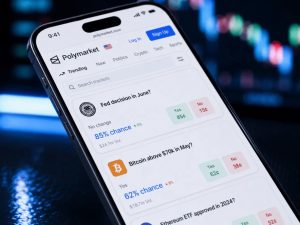
The Kalshi Washington State clash just became the sharpest battleground prediction markets have faced in 2026, and Kalshi isn’t taking its geofencing order lying down. A King County judge forced the company to lock most Washington residents out of its markets, but instead of quietly complying, Kalshi turned around and accused the state’s Attorney General of singling out one company while letting rivals run the identical business unchecked. That accusation, laid out in a letter Kalshi sent on August 28, now sits at the center of the whole dispute.
What the Washington Court Actually Ordered
Washington Attorney General Nick Brown filed suit against Kalshi back in March, arguing the platform was running illegal gambling under a different name. By August, a King County Superior Court judge had agreed, finding Kalshi likely violated both the state’s Gambling Act and its Consumer Protection Act.
According to the Attorney General’s office, the order strips Kalshi of the ability to offer Washington users contracts on sports, elections, politics, entertainment, culture, technology, science, and so-called “mention” markets — bets on whether a public figure will utter a specific word. Commodities, climate, and finance contracts stay untouched.
The court left almost no room to maneuver. Kalshi had to stand up a basic IP-and-residency geofence by August 19, then upgrade to a stronger, multi-source geofence — built with vendor GeoComply — by September 2. Blow past that second deadline, and Kalshi owes Washington $120,000 for every day it remains out of compliance, unless it can convince a judge the delay was reasonable.
Kalshi’s “Selective Non-Enforcement” Argument
Kalshi didn’t stop at compliance. Its legal team sent Washington’s Gambling Commission a letter arguing the state enforces its gambling law unevenly, naming Polymarket and the North American Derivatives Exchange as companies offering nearly identical event contracts in Washington without facing anything close to Kalshi’s order.
“The inconsistent pattern of enforcement cannot be explained by any legitimate distinction between Kalshi and its competitors,” Kalshi’s lawyers wrote. Their logic is blunt: if this type of betting is illegal, it should be illegal for everyone offering it — not just whichever company the state happened to sue first.
Washington isn’t backing down from that framing. A spokesperson for the Attorney General’s office fired back that the office “does not have to simultaneously prosecute all entities potentially engaged in the same activity to obtain a judgment against one of them.” Pursuing one operator ahead of others, the state insists, reflects normal enforcement priorities rather than bias.
Why Polymarket Isn’t Facing the Same Order
Jurisdiction explains much of the gap. Kalshi operates in plain sight as a CFTC-registered exchange under federal oversight, which hands state regulators an obvious, easy-to-reach target. Polymarket has spent roughly the past two years pulling back from US users and rebuilding its compliance structure, leaving state regulators a far messier company to chase through the courts. Judges tend to go after whichever entity is clearly established and easy to reach directly — not necessarily whichever one is breaking the same rule.
That doesn’t mean state law can’t eventually catch up with Polymarket. We tracked the same dynamic in our coverage of Kalshi’s Nevada geofencing dispute, where an identical $120,000-a-day fine structure surfaced months before Washington’s order. States keep reaching for the same enforcement playbook, and Kalshi keeps firing back with the same fairness argument.
Kalshi also isn’t fighting this fight alone. Former U.S. Solicitor General Neal Katyal now leads the company’s appeal before the Washington Court of Appeals — a clear sign Kalshi expects this case to matter well beyond Washington’s borders.
The Bigger Legal Question: Federal Preemption
A much bigger question looms behind the Washington case: does federal law give the CFTC exclusive authority over exchanges like Kalshi, or can individual states stack their own gambling laws on top? Kalshi’s entire legal strategy, in Washington and everywhere else it’s fighting, rests on the claim that federal law should preempt state gambling statutes wherever CFTC-regulated contracts are involved.
Courts around the country haven’t settled on an answer. Some judges have sided with states, others have leaned toward federal preemption, and that split is a big reason many expect this question to eventually reach the Supreme Court. We traced a related version of this clash in our piece on Kalshi’s dispute with New York regulators, where the same federal-versus-state argument played out.
What Happens Next
Kalshi is honoring Washington’s geofence while its appeal moves forward. Anyone logging in from Washington after September 2 should find sports, election, and mention markets locked out, even as other categories keep functioning normally. The “selective non-enforcement” letter isn’t a lawsuit on its own, but it pressures the Gambling Commission to explain why Polymarket and NADEX have escaped the same treatment — and it gives Kalshi a paper trail it can point to if this case climbs to a higher court.
Washington isn’t running this play alone, either. Nevada and New York pulled similar moves against Kalshi over the past year, each with its own geofencing deadline and fine schedule. The pattern has become predictable: a state regulator sues, a court grants an injunction, Kalshi geofences the state while appealing, and the fight turns into a federal-preemption argument. Washington adds a new twist with its selective-enforcement angle — Kalshi isn’t only defending its own conduct here, it’s making regulators explain why ignoring Polymarket and NADEX doesn’t undercut the case against Kalshi alone.
The stakes stretch well past one state. A Kalshi win on federal preemption could blunt similar lawsuits other states have already filed. If Washington’s approach holds up instead, expect more states to copy the formula: sue first, geofence fast, and let the fairness fight play out on appeal.