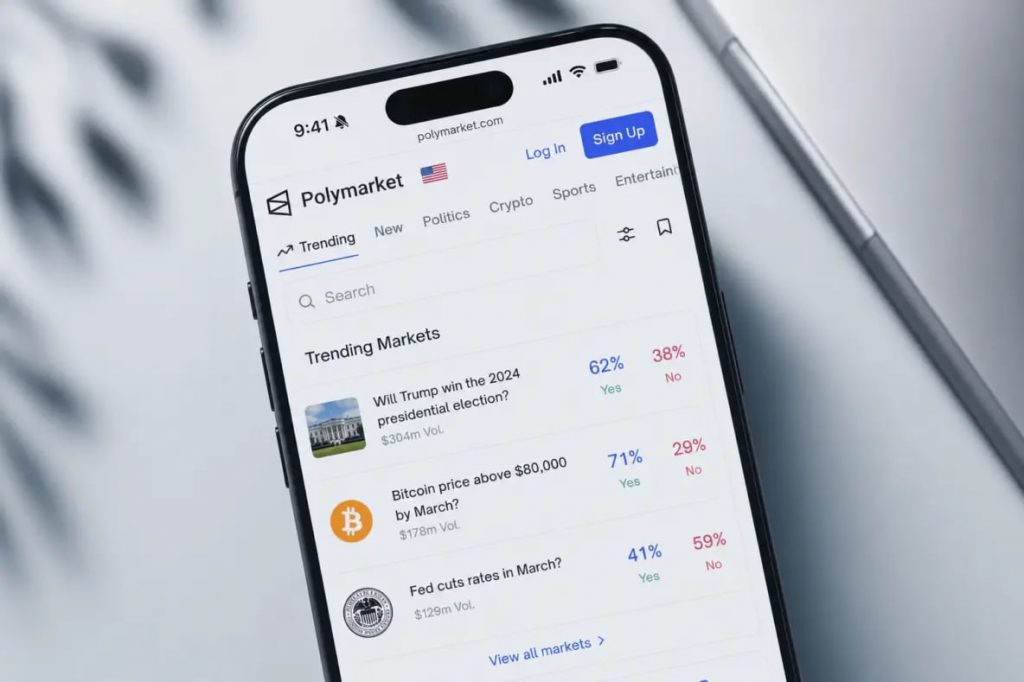
Is Polymarket legal in the US? As of October 2026, the honest answer is still neither a clean yes nor a clean no. Polymarket USA — the CFTC-regulated exchange built specifically for American residents — is open and taking trades. The international Polymarket.com platform remains locked to close-only access for US users, several states are still suing to keep the platform out entirely, and the law that was supposed to settle crypto’s broader legal footing, the CLARITY Act, just failed its first real test on the Senate floor.
What Is the CLARITY Act?
The CLARITY Act — formally the Digital Asset Market Clarity Act of 2025, H.R. 3633 — splits crypto oversight between two regulators. Assets that function as investment contracts fall under the SEC; digital commodities fall under the CFTC. It’s built to end a years-long jurisdictional fight over who actually regulates crypto in the US.
- July 2025 — the House passes H.R. 3633 with bipartisan support, unusual for crypto legislation.
- June 2026 — the Senate Banking Committee advances an amended version, led by Senator Tim Scott.
- September 15, 2026 — the Senate blocks the bill on a cloture vote, 49–50, eleven votes short of the 60 needed to open floor debate.
The vote split entirely along party lines: every yes vote came from a Republican, four Republicans voted no, and every Democrat who voted was against it. Senator Cynthia Lummis, the lead Republican negotiator, called the bill dead afterward. It isn’t dead procedurally — Senator Thom Tillis switched his vote at the last moment specifically to preserve a pending motion to reconsider, and that motion hasn’t been scheduled for a new vote. The Senate’s work period runs through November 6, overlapping the November 3 midterms, leaving fewer than 36 legislative days before a new Congress is sworn in in January 2027.
The sticking points going into that vote were how to tax stablecoin rewards, where liability sits in DeFi, and a bipartisan ethics provision restricting officials from profiting off crypto while in office. None of it got resolved, which is part of why the bill stalled rather than advanced.
Is Polymarket Legal in the US Right Now?
The current picture involves two separate products wearing one brand name. In November 2025, the CFTC granted Polymarket an Amended Order of Designation, clearing the way for a regulated exchange built around QCX LLC, an entity Polymarket acquired specifically to inherit its existing derivatives-market registration. That product, branded Polymarket US and cleared through Polymarket Clearing, launched on December 2, 2025, funded in dollars and run on a separate ledger from the original crypto-based site. After six months of invite-only access, Polymarket US dropped its waitlist in May 2026; any US resident who passes KYC can now register without an invite code.
The international Polymarket.com site is a different story. Per Polymarket’s own geoblocking policy (checked October 13, 2026), the United States sits in the “close-only” category on both the web frontend and the API — accounts can close existing positions but cannot open new ones. Polymarket USA access, in other words, runs through the regulated US product now, not the original site most non-US traders use.
States haven’t lined up behind the federal green light. Nevada’s Gaming Control Board won a preliminary injunction against Polymarket US in May 2026, barring it from offering sports, election, or entertainment contracts in the state while enforcement proceeds. Tennessee’s regulator issued a cease-and-desist in January 2026. Minnesota went further and passed an outright ban that was set to take effect August 1, 2026 — a federal judge blocked it days before launch after the CFTC and DOJ sued, arguing the state law is preempted by federal regulation. Whether Polymarket is usable from where you live depends on your specific state, not the federal clearance alone. Our country-by-country legal guide tracks this same question outside the US, and our breakdown of restricted countries covers the international close-only list in full.
The CLARITY Act’s Stakes for Polymarket
Polymarket’s original platform runs on blockchain rails and settles everything in USDC — see our guide to how Polymarket works for the mechanics. The CLARITY Act would have clarified the regulatory status of exactly that infrastructure, which was a genuine step toward resolving the international site’s own US standing.
One nuance is easy to miss: the CLARITY Act is a crypto law, not a prediction-markets law. It classifies digital commodities, tokens, and exchanges. Event-contract jurisdiction — whether a market on an election or a Fed decision counts as a swap, a security, or something else entirely — runs on a separate track through CFTC rulemaking and the federal courts. We covered that fight in detail in our look at the CFTC swap rule, which is arguably more consequential for Polymarket and Kalshi’s day-to-day legal footing than CLARITY ever was.
The Market Is Betting Against Its Own Legalization
The question of whether the CLARITY Act becomes law is, fittingly, a market on Polymarket itself. “Clarity Act signed into law in 2026?” launched January 11, 2026, and has traded roughly $23.5 million in volume since.
The odds tell the whole story of this year in miniature. They ran as high as 73% in May 2026, fell to a then-record low of 32% by mid-July, and have since collapsed to around 5% Yes after the September 15 cloture vote failed. Traders on the one platform that stands to benefit most from CLARITY passing are pricing in that it mostly won’t — at least not before the year is out.
Trading Polymarket From a Blocked State or Country
If you’re blocked on the close-only international site, the common workaround is a VPN routed through a jurisdiction where Polymarket.com is unrestricted — check your state’s and the platform’s own terms first, since this sits in a gray area regardless of the technical fix. If you’re eligible for Polymarket US and your state isn’t one of the ones actively litigating against it, the regulated product is the more straightforward path.
Some traders instead use a Telegram-based tool such as Overdog. Funds stay in the user’s own wallet, and it connects directly to Polymarket’s original smart contracts on Polygon — sidestepping the close-only block on the website itself rather than tunneling around it at the network level. We go deeper on this category of access tool in our guide to trading terminals for blocked countries.
Nothing here is legal or financial advice, and availability shifts by state and by platform — check current rules before you trade. Full details in our Disclaimer.
Bottom line: conditionally legal. Polymarket US is cleared federally and open without an invite code, the original international site stays close-only for US accounts, several states are still fighting the federal approval in court, and the law meant to settle crypto’s broader legal footing failed its first Senate vote in September with no new one scheduled. Polymarket’s own market on CLARITY’s fate is pricing roughly a 1-in-20 chance the picture changes before the year is out.