South Korea just told every internet provider in the country to cut off access to Polymarket. The Korea Communications Commission reached this decision after spending weeks reviewing the platform alongside police and gambling regulators. If you want to understand why South Korea banned Polymarket’s winner-take-all markets, you have to start with how Korean law defines gambling — not with the excuses Polymarket offered in its own defense.
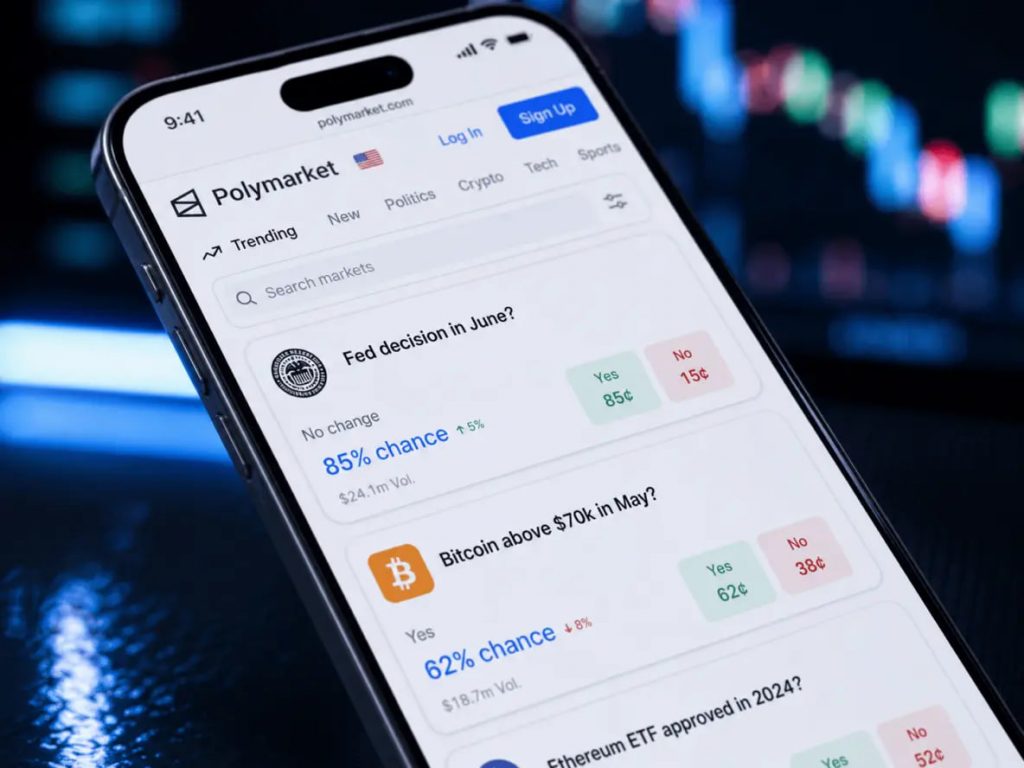
Polymarket built its name as a prediction market: users put money on real-world outcomes — elections, sports scores, weather patterns, geopolitical events — through blockchain contracts instead of a standard betting slip. Some countries accept that framing. South Korea doesn’t, and this ruling draws a clear line for one of the toughest gambling regimes on the planet.
The Legal Basis: Two Laws, One Verdict
South Korean citizens can’t legally gamble, full stop, aside from a handful of licensed venues and government-run games. The Criminal Act punishes violators with fines around $7,000, and regulators applied this general anti-gambling law straight to Polymarket’s contracts — they treat a “yes” or “no” bet on an event exactly like a wager placed at an unlicensed casino.
The commission also leaned on the National Sports Promotion Act, which specifically targets unlicensed sports betting. A large chunk of Polymarket’s markets track sports outcomes — who wins the game, how a tournament ends, individual player stats — and regulators said this matches precisely what that law exists to stop, no matter what technology sits underneath the market.
Officials cast the formal vote to block access on August 18. Before finalizing the order, they brought in the National Police Agency, the National Gambling Control Commission, and the Korea Sports Promotion Foundation — a coordination effort that turns this into a cross-agency enforcement move rather than one regulator acting solo. The block itself works like every other prohibited-site order in South Korea: internet providers now have to filter access at the network level, the same tactic the country already uses against unlicensed gambling sites and similar restricted content.
Why South Korea Banned Polymarket’s Winner-Take-All Markets
The real problem is structural. A winner-take-all market hands everything to one side and leaves the other with nothing, based on outcomes nobody involved can actually influence — an election result, a final score, even how much rain falls in a month. Nobody can recover part of their stake, and nobody can hedge a losing position the way a trader would in a normal financial market. The payout is all-or-nothing, and it locks in the instant the underlying event ends.
Regulators say this design pushes people toward raw speculation instead of informed trading. Combine odds-style pricing with a fixed stake and a single winner, and you get something that functions a lot more like a sports bet than a security — that’s the argument, anyway. Under that logic, Polymarket lands in the same legal bucket as unlicensed betting operators, no matter how the company brands its product in marketing copy or terms of service.
Officials also pointed to evidence that Polymarket actively courts Korean users. They singled out a listing tracking Seoul’s rainfall totals for August as proof the exchange chases a local audience rather than just running a generic global site. A market built around a hyper-local data point like Seoul rainfall doesn’t happen by accident.
Polymarket’s Defense Fell Short
Polymarket made its case at a hearing on July 6. The company pointed out that it had already pulled Korean-language support and stopped accepting won payments, positioning itself as a site Korean users could technically still reach but that wasn’t designed with them in mind.
Polymarket also argued that it never actually holds user funds or hands out betting tickets — trades settle through smart contracts instead of a house-run ledger — and claimed that should keep it under the legal threshold for a gambling violation.
Regulators didn’t buy either argument. Pulling a language option or dropping a local currency doesn’t change what the product actually does, and the commission made clear that companies can’t dodge Korean law with technical tweaks like these. The non-custodial setup didn’t help Polymarket’s case either — from the commission’s view, a marketplace where Korean residents stake a fixed amount on a binary outcome is running a betting operation, whether or not the company itself holds the money in escrow.
This isn’t Polymarket’s first brush with scrutiny. Earlier this year, a US soldier reportedly used classified information to pocket more than $400,000 betting on the raid that captured Venezuelan President Nicolas Maduro. Stories like this keep fueling the argument that these markets carry real gambling-style risk rather than pure financial speculation — and they poke holes in Polymarket’s pitch that its markets reward informed analysis, not luck or insider access.
Part of a Wider Global Pattern
South Korea isn’t acting alone here. More than 30 countries — including France and Argentina — already restrict access to Polymarket, and the reasoning keeps repeating itself: winner-take-all structures built around political, sports, and weather events look too much like gambling for local regulators to overlook, especially in places that already run tight state monopolies on betting and lottery products.
Want the full country-by-country picture? Check our breakdown of Polymarket geo-blocking and restricted countries, which tracks where access is limited and why.
Brazil took a similar route for its own regulatory reasons, and that case shows just how differently local rules can shape access even for the same platform — read our piece on why Polymarket is blocked in Brazil for the details.
What It Means for Korean Users
For everyday users inside South Korea, the block operates at the internet provider level. Once providers roll out the order, a direct connection from South Korea simply won’t reach the platform anymore — the same way other blocked gambling sites already sit unreachable through a standard ISP connection.
Polymarket already tried limiting its exposure by dropping the Korean language and won payments, and regulators still weren’t satisfied — so a similar workaround probably won’t reopen access this time either. Any future appeal needs to tackle the structural objection regulators raised, not just walk back a few surface-level localization choices.
Some users might try VPNs or other routing tricks to reach the platform anyway. That comes with its own legal risk under the Criminal Act, since the ban targets the activity itself, not just how someone accesses it — a Korean resident placing a bet through a VPN is still gambling under domestic law, no matter which server the traffic runs through.
If you’re trying to figure out where prediction markets stand legally outside this one case, our guide on Polymarket’s regulatory status by country covers the broader landscape.
South Korea’s decision adds one more data point to a pattern that keeps showing up worldwide: regulators treat winner-take-all prediction markets as gambling first and a financial product second. That framing — more than any single feature Polymarket strips out — is what keeps driving new restrictions, and it hints that future enforcement elsewhere will follow the same script: a structural objection to the product itself, not just a fight over language settings or payment rails.