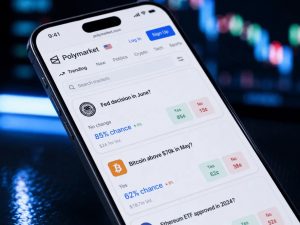
A single U.S. inflation report doesn’t create one market on Polymarket. It creates six, seven, sometimes ten of them, each one a separate bet on a different inflation range for the exact same number. That ladder structure is how polymarket cpi markets work: instead of a simple yes-or-no question, traders pick from a row of price bands that all resolve the instant the Bureau of Labor Statistics publishes its figure.
Not One Bet, a Ladder of Them
Most CPI events on Polymarket are built as a set of threshold contracts. A typical annual inflation event might offer separate markets asking whether the year-over-year number comes in above 3%, 4%, 5%, 6%, 8%, or 10%. Each threshold trades as its own binary contract with its own price.
Because the bands overlap in a predictable way, you can back into a range estimate just by comparing two of them. If the “above 4%” contract trades at 60 cents and “above 5%” trades at 35 cents, the market is pricing roughly a 25% chance inflation lands somewhere between 4% and 5%. This same overlapping-bracket design is what we broke down in our guide to negative risk markets, since CPI brackets are a direct application of that mechanic.
How the Price Moves Before the Report Even Drops
CPI contracts don’t sit still between release dates. Traders adjust prices using the same inputs economists watch: the Producer Price Index, gasoline and shelter cost trackers, airline fare data, and any hints from Federal Reserve officials about where they expect inflation to land.
Wall Street’s own consensus forecast, usually a Reuters or Bloomberg survey median, acts as an anchor. Polymarket prices tend to cluster near that consensus days ahead of the release, then drift as new data trickles in. A market sitting at 55 cents the morning of the report is reflecting real money betting on a specific outcome, not just a poll of opinions.
What Happens at 8:30 AM on Release Day
The Bureau of Labor Statistics publishes CPI data at 8:30 AM Eastern, typically on a Tuesday or Wednesday in the second or third week of the month. The next release lands on November 10, 2026, covering October’s numbers.
The moment that number hits, the band containing the actual reading resolves to $1 per share. Every other band in that same event collapses to zero. There’s no waiting period and no dispute window for a clean, undisputed government number, which is a sharp contrast to the slower, contested resolutions we documented in our piece on Polymarket’s Fed rate markets.
Headline CPI and Core CPI Are Different Bets
Polymarket runs separate events for headline CPI and core CPI, and mixing them up is the single most common beginner mistake. Headline CPI includes food and energy prices, which swing month to month with gas and grocery costs. Core CPI strips those out, so it moves more slowly and tends to be the number the Fed actually cares about.
In months when gas prices spike or drop sharply, headline and core CPI can print noticeably different year-over-year rates. A trader who bought the “above 4%” band on headline CPI thinking it was the core number can watch a market resolve against them even when their underlying read on inflation was correct.
Why CPI Prints Move Fed Rate Markets Too
CPI isn’t a standalone data point for traders. It’s one of the two or three biggest inputs into what the Federal Reserve does next on interest rates, alongside the jobs report. A hotter-than-expected CPI print on a Tuesday morning routinely moves Polymarket’s Fed meeting odds within minutes, before the stock market even opens.
That link is why active CPI traders tend to also watch the rate-decision markets side by side. A single inflation surprise can reprice both at once, and the direction of the move is usually the same: higher inflation pushes rate-cut odds down, and a soft print pushes them back up.
Mistakes That Cost Beginners Money
Three patterns show up again and again in CPI market losses. Traders buy the wrong headline-versus-core band, they treat a 70-cent price as a near-certainty instead of a 70% probability, and they ignore that BLS data gets revised in later reports, meaning the “final” number that resolves a market is the one printed on release day, not any later restatement.
Position sizing matters more here than in slower-moving political markets. A CPI event settles in a single instant at 8:30 AM, so there’s no gradual unwind if you’re on the wrong side of a band. Treating these contracts the same way you’d treat a multi-week election market is the fastest way to misjudge the risk.
Polymarket’s CPI brackets reward people who understand the gap between headline and core inflation and who read band pricing as probability, not prediction. Get those two things right, and the ladder structure stops being confusing and starts being an edge.